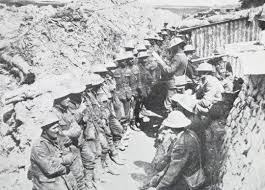
As most folks know, I come from Newcastle on the Tyne, about 150 yards off Scotswood Road in a place which now doesn’t exist, except in the minds of City Planners, South Benwell. Thinking about the Somme last night opened a big chest full of memories, none more vivid than Old George”. George was by trade a “watchie “, the traditional form of security on building sites. On every site there would be one, he would turn up after work and get his brazier lit and do his random walk arounds to keep an eye on stuff. Watchies were usually not the most intellectually gifted of the race but they endured. Many an ex soldier found his way into the profession and even further into the Corps of Commissionairres. George was one of these and had reached the retirement age at a time that I was just starting to go out to work. He had a new job, to be one of the “gadgies” at one of the two working men’s clubs in our small bit of Newcastle, the Old Hall. Georges job was to make sure anybody underage or not in the club or affiliated, didn’t get in. George was fierce with me, I never got past him to sneak a quick half of Exhibition with the Coulsons. George had me tagged with his strident ” Hey ye- aaah naa your father”. I went back once after I had joined up and done a bit overseas. He accosted me in the foyer at his little office and asked for my club card, which I didn’t have, and I showed him my military ID card. He looked at it and said to me I knew you were going to be one of us since you were a laddie. That puzzled me but talking to the old guys playing dominoes later, I found out that he had gone over the top on 1 July 16 with the Tyneside Brigade and had got to the first German trench line before being headshot. How he survived was a miracle, but after months in hospital they saved him and amazingly signed him off as being fit for service.
The only name in France more frightening to a British soldier than the Somme was actually, the third battle of the Somme – Paschendale Ridge! Guess where they sent George. There were hundreds like him who got on and did it, men and women. They did it again 23 years later. It puts it into perspective belief that older people have ruined the future for todays young’uns. Not so, those older people saw their families and friends lose a generation and a half to the World Wars. God speed George, now long gone and only remembered by his family and the odd maudlin wordsmith. Time some of that came from our betters mate.
It’s strange to think that none of the accepted tomes of military recollections hardly ever includes the detail of training to fire one’s personal weapon. The relationship between the RAF Regiment Gunner and his rifle is symbiotic, it is part of him, part of his psyche. He is familiar with every scratch, scrape and blemish of its surface. He has kept it, swum with it, run with it and cleaned it, time after time after time. It works for him if he looks after it, a perfect training vehicle for a woman, except nothing, can train any man to cope with the distaff side of the race. I decided to punctuate my little stories with odd snippets of ranges after realising that some of the best episodes had been on ranges. It also lends itself to reminiscence because of the many and varied different ranges and training areas, ranging from a field in Belize where we stuck a few targets up and blazed away with our rifles for a good couple of hours, cathartic was not the word, to the delights of the Catterick and Feldom training areas and ranges in balmy North Yorkshire.
In the distant alleyways of my life there also loomed large an event that would reduce strong men to drink and weaker men to contemplate a future in a distant northern province of Canada, the Lloyds Cup. The premier shooting competition in the Corps was visited on us every single year and was a serious matter. At least it was a serious matter for our CO’s. It could spell the difference between a further promotion or the commencement of a search for a security managers job for De Beers or other such prestigious organisation. Organising such a shoot was also one of the two open chasms into which more junior officers could fall, the other being the Station Firework Display, which for some reason always went wrong (A modern day risk assessment in today’s Air Force would ban them completely).
As time has passed the manner of the conduct of the Lloyds Cup shoot has changed in line with the training methods. The Annual Personal Weapons Test was the last persona I recognised before my retirement and I have no doubt it will have changed since. The test mirrored the changes in range construction and the gradual arrival of technology on the scene of military training. When I was a lad it was known as the Phase 5 Rundown. This was as it stated running down from 300 yards to 100 yards and firing at the ranges in between. Then advancing the last few years to close with the enemy and kill him – the stated doctrine of all British infantry since Oudenard onwards. Every man jack on the squadron participated, even the flightless birds who fixed the wagons and did the leave passes and screwed up the radio sets. The average of all scores decided on the destination of the cup (and the officers promotion roster) each year. Simple really except the devil was in the detail or, to be more precise, in the range booking.
Every rock knows that ranges are not simply classified on their facilities for firing. Such intangibles as a good scoff, open all hours also helps, as does an uninterrupted supply of beer for those not unlucky enough to be planning ranges, prepping ranges or guarding everybody. Decent accommodation is not necessary for a good range camp, the tin huts at Willsworthy Camp spring to mind, where I once passed a week range firing on Dartmoor. Despite it being the height of summer in the rest of the UK, Willsworthy remained a universe apart with all 4 seasons often happening twice a day. Keeping dry and warm was important and the sole means of this were the coal stoves in each of the cattle sheds where we slept. As a consequence the troops went on the ranges smelling and looking like wee Geordie pitmen coming off shift down Paradise Drift. So ranges were a very complicated equation and not entirely recognised by the rules of the Lloyds Cup. The reason for this, I suppose was either a simplistic view of life or one of those officerly thoughts that good troops would manage to equalise any anomalies. Whatever the reason, the squadrons in the southern half of the UK always won it. Us lot in the north never had a chance despite being on the edge of one of the most extensive range complexes in Northern Europe. It was not unusual for the troops to deploy at the start line complete with scaling ladders and crampons for the ascent ahead. The names of those pleasure centers, like Deer Park and Whipperdale, fail to mask the long remembered pain of such days. Deer Park, in particular, was almost vertical between the start and finish. As the range was up hill, each individual firing point had to be built up so that the last 5 yards was 20 feet higher and actually had wee sets of steps cut into the side of the elevating mounds. By the time us unfortunates got to the firing point (under strict timing conditions) seeing the target became somewhat of a second prize to garnering enough oxygen into the lungs to sustain life.
Failing the delights of the Catterick range complex you might be unlucky enough to draw the reserve range at Battle Hills. I have been on many ranges in my life but the memories of Battle Hills is a horror story in a league of it’s own. It is the highest range in UK, above the A66 and the town of Brough. A winding road led in to the depths of northern Pennines but anything north of the entrance of the ranges was the marked on a fairly empty map as “here be tygers”. The range was dilapidated and the unfortunates who were wardens eked out their miserable pittance by dispatching all manner critters on adjoining homesteads. Range discipline was always difficult, with the range road in the centre, but the weather was always the killer. Battle Hills would be booked for 3 days for a shoot that normally would take half a day. Mist was the staple diet in reality low flying cloud. Range Officers would need runners to be able to see either end of the firing point and more than once I have seen a battle hardened young switched-on officer carted back to Catterick by land rover gibbering and frothing at the mouth after a session there. This was especially true if the mist lifted unexpectedly and he discovered he had been firing for ages with the butts flag up – and/or a couple of the range wardens wandering back into the butts after topping a couple of reluctant sheep at Cowheugh Farm just down the road, with the years mutton ration humped over their shoulders, waving to the troops. There was a huge inclination to turn their lights out permanently but common sense ( and large and wise NCO’s) guaranteed the continuance of their sheep husbandry activities.
Some of the other ranges, like the new-fangled ones with targets that didn’t need to be pasted up were beginning to appear at the end of the 60’s and more and more became common. Strangely the troops preferred the old Gallery Ranges with some hours being spent in the butts pasting out bullet holes with manky paste pots that had originally been created in the run up to Waterloo and the paste just replenished annually with some pungent rubbish. Small squares of different colours were the texture of the targets and god help you if you got a nit picker who could see from 300 yards away that you had put a ochre coloured patch on one that demanded a black one.
The most fun were on the field firing ranges like those at Otterburn or Sennybridge. Sennybridge is a name that strikes fear into most old rocks – a place of cold damp and wind, and that was just the billets. The 16th of Foot were encamped in Sennybridge, preparing for one of the many deployments overseas we got volunteered for and were honing up our battle shooting skills on an Individual CQB. This took the form of the usual recce patrol – you get separated from the rest of the patrol and have information that can save the Free World but you have to get it back to base through a mixed bag of Russian Spetznatz. In those days we had no electronic pop-ups and all the targets were used on a pull system with handles and levers and spindles, very effective but Heath Robinson. The guys who pulled the levers were protected by bunkers and were usually those of the Flight who were injured or more intellectually challenged. One of these, of Cro-Magnon lineage, was installed in the main target of the range, a crosser about 4 feet up over a stream. The routine was usually a SNCO and a gunner followed the hapless wight, who was being exercised, down the range. The SNCO controlled the range and the gunner carried the flags which indicated to the occupants of the target bunkers when to put their targets up and down – simples – hah!
I had gone down on one of the first runs and did my stuff well despite getting drowned when the crosser came up late and I had to take cover in the stream. Still I was top of the leader board and was grabbed by our Sergeant Mick, the Brummie, and I carried on from there. The boys had a good day and many plywood Spetznaz were dispatched with vigour but as the afternoon wore on one thing became very clear. Unless my mate, the google eyed Yorkie, could beat my score, I was going to win the kitty. We always had a kitty, it was a bit of an incentive, but the rules were complicated which never became apparent until it became complicated. Anyway, the other thing that was apparent was that Cro-Magnon man in the crosser pit was less than consistent. In fact he was like a black powder pistol, you pressed the trigger and felt the hammer go forward and then a wait of varying degrees whilst it sparked and another wait whilst the percussion cap was struck and it fired creating great amounts of pungent black smoke and a muzzle flame like an artists rendition of a man o’ war letting loose a broadside. A similar unreliabilty would manifest itself with Piltdown man stretching the time frame between the lever being located and it being pulled. It could vary between 10 seconds and a number of minutes and expletives. Yorkie had a secret, despite the outward appearance of a beer sodden wretch with Rugby League tendencies he was, in fact, a very good soldier, and, after getting his two mags of 7.62mm ( and swapping the odd round into the other mag – you didn’t think we were daft enough not to work out that two rounds per target meant you needed a even number of rounds in the box otherwise you got a stoppage in the middle of an engagement) cammed up and moved to the start line ready to boogie. Yorkies strategy was a bit like mine – pick your next cover and get to it asap. All went well, even the mag change negotiated until 2 targets from the end. A huge boulder gave some cover to get the breath back before crossing the stream, where the mover was located. The idea was to get the firer to fire one from the shoulder and one from kneeling as there was no cover at all. Off we went, the Yorkshire whirling Dervish moving at good pace when I get the signal to raise the mover. Green flag waving to where I know the bunker is – nothing happens. Yorkie is now into the stream and Mick is signalling to me – too late – out of arc, when the caveman lets go and down comes the mover. Yorkie executes a turn that would have had Jayne Torvill purring with professional pride and lets go a double tap – I stick the red flag up – the Fig 11 target rotates off the pulley and steel wire and there is the most horrendous scream from the bunker. As an experienced RCO myself in later years, I can only guess what was going through Micks mind. The prescribed drills were carried out – unloaded and cleared and I was dispatched forward to see what the damage was to Piltdown Man. As I got close all I could see was him on his back outside of his pit covered in claret, hands to his head. Out with the water bottle and sort him out sharp. The upshot :- Piltdown was not just dim, he was a lazy git as well and had got into the habit of wandering out of his pit so he could do some fancy handwork with the target which meant he didn’t have to patch the targets as he should have. The second of Yorky’s shots had hit the small pulley wheel at the top of the target completely destroying it so the target had spun around crashing down on Piltdown’s head splitting his head open and a small cut spewing forth his lifeblood. He never whinged about the pain after that first cry and the opinion on the flight was that it was a case of no sense no feeling. Anyway the end result was when the scores were added up and cogitated over in the back of the Bedford it was decided that the kitty (there is ALWAYS a kitty) would go to me for the best score, but as I was driving the Boss in the rover and was not there to collect it, I was disqualified and awarded to Yorky because of his flair and getting Piltdown. However, he was immediately disqualified because he hadn’t killed the slow witted numbskull and it was put into the pot for the nights festivities in the NAAFI.
Once the Western-allied forces had crossed the Rhine at Xanten and Remegan, the end of the war was literally days away. April saw the British 21st Army group punching through the Ruhr and the Northern German plain, with Hamburg and the Elbe as the targets. The Russians were in the suburbs of Berlin and forward units had bypassed the capital and were approaching Lübeck on the Baltic. The Americans were sweeping across Bavaria and Southern Germany to Austria and the Hungarian Border. By the early days of May, after Hitler’s suicide, local deals were being conducted with Allied Commanders across the board, coherence in the German High Command was failing and the country itself disintegrating.
Against this background of the agreed imminent unconditional surrender of all German Forces, at 08:00 on the 5th of May, the orders that arrived from AOC 83 Group to RAF Regiment units at 20:00hrs on the 4th May were simple:-
Take all airfields in North Germany in Schleswig Holstein.
Disarm all German Forces and prevent any destruction of surrendered material
Segregate all allied POW’s for repatriation
It was anticipated that 21st Army Gp would advance further until the German cease-fire (in reality they didn’t, meaning the Task Force Units would be very much out on a limb amongst at least 150, 000 armed members of the German Armed Forces).
The Strategy
The RAF Regiment would form 9 Task Forces of varying strengths dependant of the risk and the size of the targets. Units would be ready to move at first light on the 5th May at best possible speed.
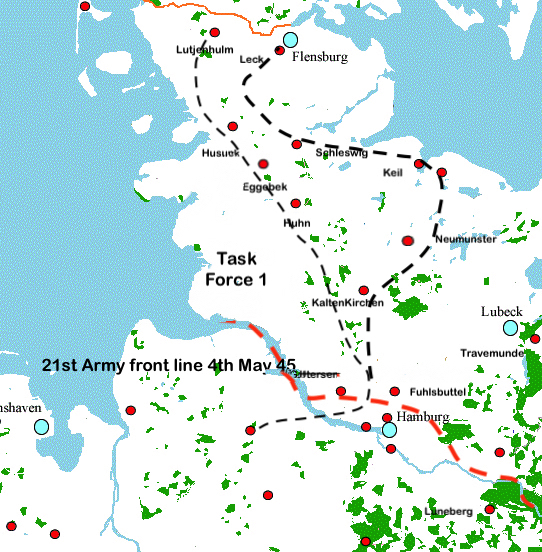
TF1 was ordered to take the most northern of the Airfield – Lutjenjolm astride the German / Danish border. There was little intelligence at what lay between Lt Col Casey’s Force and their objective, but after receiving the order to move at 20:00 on the 4th, 2809 AA Sqn was on the move before dawn the following day, despite being at a rear airfield and to have to replenish its fuel and other combat stores for the long journey of over 200 miles. Lt Col Casey made the decision that because of the length of the journey and the slowness of the Prime movers towing guns, he would divide his Force into Fast and Slow packets with the slow packets having all the heavy stuff and the Light Aid detachment to scoop up any vehicles that dropped out.
2809 had made good progress and by mid day was wending its way through Hamburg, as its start line for the journey North. Intelligence in Hamburg was none existent and so Casey’s Force proceeded North of the City. It rapidly became apparent that they were the first Allied troops into Schleswig Holstein as they increasingly encountered large columns of fully armed German troops. The fact that the vanguard of the British Army was led by the Royal Air Force was lost on the Germans who could not comprehend the irony. They seemed undecided, at times, either to allow the convoys to pass unhindered or stop them. On several occasions German Patrols would dive into ditches and take up fighting positions and then watch the convoy wander past, in wide-eyed amazement.
The Forward Recce Party under Fl Lt Giddings and 4 were pushing on towards Lutjenholm with great dispatch. They made great strides initially but were stopped short of Schleswig at a roadblock manned by German Fallschirmjaeger. He joined another party in a muscular discussion with the Paras who were firm in the opinion that a Truce had been enacted rather a surrender until things became clearer. Despite the documentation proving the surrender, the Paras, as Paras usually are, were adamant and unimpressed. The stalemate was only to be remedied by visiting their HQ in Schleswig. An officer was dispatched to try and sort out the impasse and the Recce party wisely repositioned their vehicles in order to make a quick getaway if the situation went south. After two hours of waiting the Officer returned with the news that the Para Commander had recognised that the War was, indeed, over and would allow safe passage to the Recce party. It was, however, conditional on the party taking the surrender of the town of Schleswig.
The Recce party dutifully moved off to Schleswig and formally accepted the surrender of the town. However, it silenced even the sharpest of Regiment wit when it was revealed that there were over 50, 000 troops garrisoned in the town. Nonplussed for some moments, a suitable solution was found with the former German Burgomeister and Commanders delegated authority over the town and its garrison and occupants. Having arranged a pragmatic and workable solution, the recce party pushed on to the objective.
Meanwhile, the Main Party had made solid progress on its alternative route that took it through Kiel, the home of the German Kriegsmarine (Navy). With great dash the party forced it way over the bridge in the won becoming the first British Troops to capture the German Navy HQ.
Rested up for the night the Task Force pushed on to its main objective the next day arriving early and seizing the airfields of Lutjenholm and Lock. Germans were disbanded and all stores seized. There were more than 66 Luftwaffe Aircraft on the base that were put together for security including two of the new Heinkel He 162 Komet rocket-powered interceptors. Secret documents and other intelligence treasure trove was also seized by the Squadron during their eagerly facilitated change of ownership.
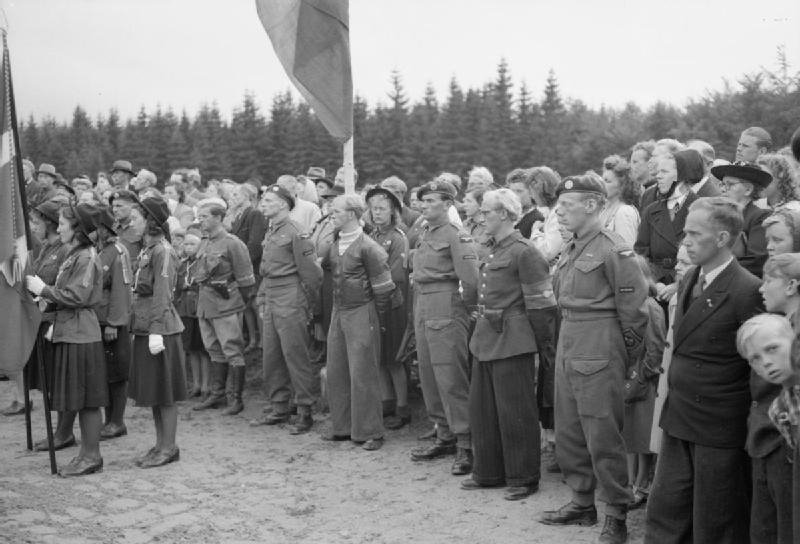
On the morning of the 7th May Fg Off’s Ketshie and Henderson were tasked with becoming the first British troops into Denmark by visiting the nearby town of Tondern. Equipped with motorcycles, the two Officers made their way towards the border. It was not plain sailing as the area was occupied by armoured units of the Waffen SS, who refused to allow them further progress. Despite many conversations, the two young officers finally made it to the final checkpoint on the German side, only to find it manned by SS troops and AFV’s. The pair had identified a small gap to one side as a rat run past the roadblock if the situation got worse. It looked more and more unfavourable, so the two young men went for it, through the small gap whilst the SS men were dumbfounded at their audacity. It was the last but one roadblock, the last being manned by the Danish Frontier Guards, who at first did not recognise the British uniform. However, it very soon turned into a huge celebration in the town for the Danes and the Regiment men. They were escorted to meet the mayor by a police car and welcomed by a guard of honour and a reception by the mayor where many gallons of Tuborg were drunk in celebration of the liberation Many photographs were taken and Anglo-Danish relations cemented in the ending of the Danes occupation.
It is astonishing that the end of the war came so suddenly and quickly in 1945. On March 23 1945, 37 days before Adolf Hitler committed suicide, the Western allies were still in their Winter Quarters on the west bank of the Rhine. The winter had been a savage one even with the Ardennes Offensive and the subsequent air attack of Operation Bodenplatte on January 1. The Dutch population were trapped on the northern and eastern bank. The Russian Army led by Georgi Zukov had pushed relentlessly on with the Wehrmacht defending every inch of the German fatherland bloodily. Hitler’s General Staff knew, however, that a breech of the Rhine would spell the end for the 3rd Reich.
On the 23 March the British Canadians and Americans struck. In a stunning textbook land /air attack, the Rhine crossing was achieved near Xanten, 37 days later Hitler was dead, the Russians were in Berlin and the British Forces had occupied as far as the Elbe, Hamburg and up to the Baltic. Hitler named Admiral Doenitz as his successor as Chancellor, he formed a government and evacuated them to the northern German airbase at Flensburg. Doenitz’s strategy was simple – get as many of Germanys assets, personnel and materiel to the west so that they could surrender to the Western Allies and not the Russians.
The Army pushed forward against a beaten but not demoralised enemy, with understandably little appetite for risk taking at this late stage of the war. Small pockets of enemy were still fighting on, but RAF Air Intelligence were determined to get their hands on as much German technical equipment as possible and glean the secrets they held. There was also a huge number of German Servicemen to surrender, disarm and repatriate in Denmark and Norway should the German surrender be, as demanded, unconditional.
The RAF decided to push on ahead of the army and begin the task of ending the war and starting the peace, in a ruined continent after 6 years of devastation. 9 Task Forces(TF) from the RAF Regiment were launched ahead of the Army front line, to seize and hold airbases and take possession of the state of Schleswig – Holstein, the remainder of Denmark and Norway. It was possibly the most difficult task, in a war of extremely difficult tasks, that the RAF Regiment had faced. It tested relatively junior ranks with decisions that they had no precedent for. This is the story of one with others to follow.
Flensburg
One of these TF was tasked with seizing the base at Flensburg on the Baltic coast. Intelligence was unaware at the time that the entire surviving German Government was also on the base. At 03:30 in the morning of the 5th May, 2856 Sqn RAF Regiment were alerted to move as part of Lt Col Crabbe’s force to take the airfields of Flensburg and Lock. The objectives were:-
Occupy and secure the bases
Disarm the German defenders
Prevent looting
Protect equipment
Nothing in the orders alluded to taking the German Government prisoner. The Task Force was to be ready to move by 10:00hrs. The Bofors of 2856 were the major cause of the TF initial slow movement. The route was unknown – there were many diversions, the weather was ill favoured, and breakdowns were frequent. Nevertheless, by 13:35 the TF had crossed the Elbe and passed through Hamburg, with great difficulty because of the bomb damage. On leaving the city an air of determination was felt by the Gunners of the TF as they passed the last forward troops of the 7th Armoured Division – no more Allied troops were seen after this.
The TF covered 110 miles in the first day harbouring at a German residence and settled into night routine around 18:30. During the remainder of daylight hours the amount and variety of traffic pouring past towards Hamburg as ceaseless, with huge numbers of displaced people escaping.
05:00 hours the next day saw the TF moving again and began to encounter more and more armed Germans. Hobden’s Sqn encountered Soviet forces east of Travemunde . At Rendsburg they encountered a battalion of German paratroopers, in full battle order. The recce element of the task force’s quick-witted escape was only matched by the speed of acceleration of the jeeps exiting the Town Square. Their commander refused to accept that the end of the war was at hand. Hobden had fifty men with him and after an hour of ‘forthright discussion’, the German colonel gave way and Hobden’s small force crossed the bridge to resume its advance. Close to Schleswig, British POWs alerted the TF that there were SS in Flensburg who were not welcoming hosts. The TF proceeded further with its “war face on” and every weapon manned and ready, Flensburg appeared to be heavily garrisoned and there was an air of apprehension when it secured the airfield.
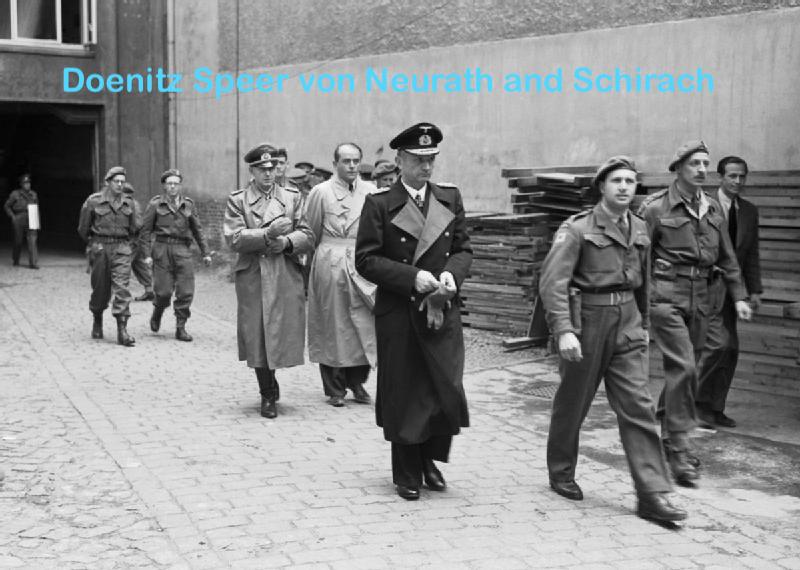
Flensburg was occupied by many thousands of troops from varying arms of the German Armed Forces including SS panzer groups and Paratroop units as well as Flak and Communications element. Lt Col Crabbe’s force of some 250 men were uncomfortable in the midst of several heavily armed German units – a FULL 16 hours ahead of the surrender time. After meeting with the base commander, the surrender of the base was secured, and disarmament commenced. 4000 Luftwaffe troops surrendered. The hostility of the surrendered bristled with every interaction between the Regiment teams and the Germans. All guards were swiftly replaced by Regiment gunners, all transport gathered into a central location and a no movement order lockdown implemented. Almost by chance Admiral Doenitz, Hitler’s appointed successor, was found and confined together with Albert Speer, Hitler’s production genius and the remainder of the War Cabinet.
At 17:50 Lt. Col Crabbe took 2 Flights further on to Lock where he took the surrender of almost 7000 troops and a full Squadron of the latest Me262 variant – Schwalbe (Swallow), the fighter variant.
Curiously it was not until the 23rd May, some 17 days after the TF had taken the base and detained Admiral Doenitz, that he and those below were arrested and charged with war crimes, due to negotiations with the Americans. Doenitz and Speer along with Schirach and Von Neurath were each sentenced to between 10 and 20 years imprisonment.
After occupying 16 airfields and securing the aircraft and equipment on them, the various RAF Regiment TF’s took the surrender of 50,000 Germans.
The Curious case of Dr Tank and the Focke-Wulf takeover 1945
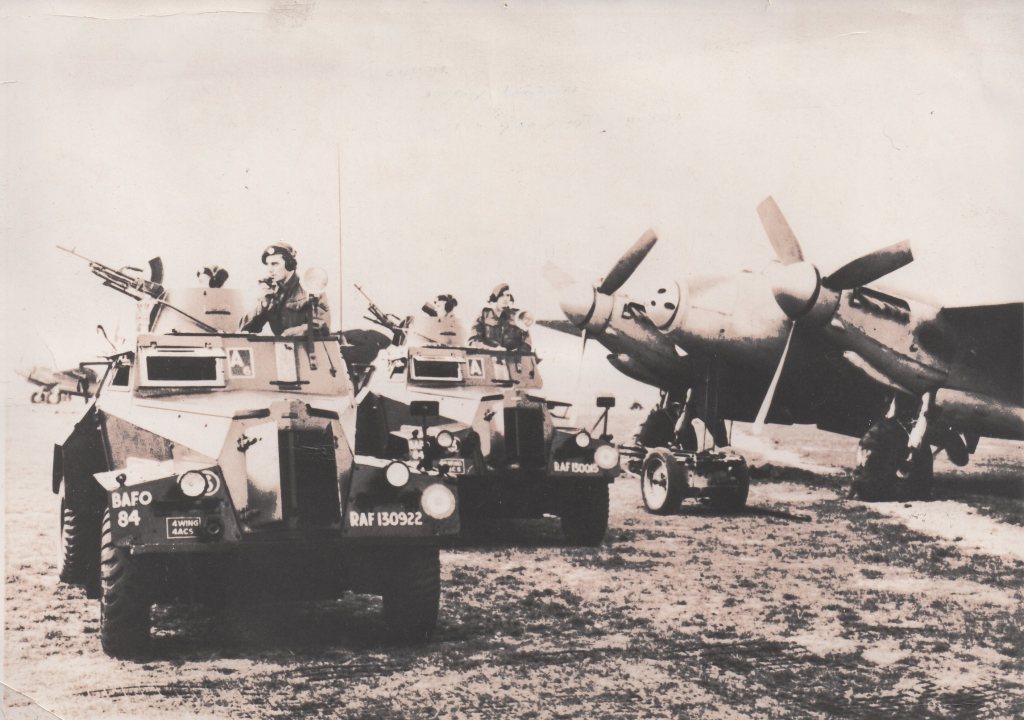
In March 1945 RAF Regiment units were pressing hard on the heels of the retreating German Forces. In the main, their task was the securing of Luftwaffe bases, equipment and personnel before they could be destroyed and the possibilities for re-engineering or the gleaning of knowledge, be lost. These units were often in front of their front-line army comrades, in what was a rapidly disintegrating German defence. During the week 6-11th April 1945, British Forces in Northern Germany were dodging between strong but static German Military resistance and fleeing terrified Civpop. The HQ of 2ATAF was the hub of the Allies air power in the North and the speed of the advance since the crossing of the Rhine in Kleve had accelerated the follow up, moves of the HQ. Each move was reconnoitred in detail by a small party consisting of the HQ sigs and Intelligence Officers, Camp Commandant and some Regiment muscle for driving and FP. Each move had conformed to this, so it was a surprise when the next and probably last move under war conditions was a major deviation from the pattern. It had been decided that the best place for the new location would be the small town of Bad Eilsen, some 6 miles to the south and east of Minden. The site would be the base for the main and TAC HQ during the occupation of Germany. Operation WOOLWORTH, as the move was to be known, was to be a departure from the previous low risk moves where a location was cleared and bypassed 2 to 3 days before the recce party would visit it. The Bad Eilson site was considered optimal for the occupation and so would be occupied as soon as possible after the Germans had been driven out. It should be understood that the defenders in that area were WAFFEN SS Panzer grenadiers rated as the Germans crack troops. To hold the town would therefore need a much larger force to hold it. So in addition to the normal recce party the force would include 2 RAF Regiment Rifle Flights and an Armoured Flight with their Humber Mk 3 Scout Cars, No 5072K Mobile Signals Unit and a small RAF Bomb Disposal team to deal with mines and booby traps in the HQ’s proposed area. The Operation was commanded by Wng Cmdr Nash RAF Regiment.
The task grouping crossed the start line at Suchelen at 16:00 on the 4th of April. Fierce resistance was being encountered from locally directed forces and it took 4 days for the task group to finally weave its way into Bad Eilsen at around 11:30 on the 8th. Two Humber Scout cars were held in the centre of the town and a third car went forward to investigate further. Although fire was incoming most of the time it was neither regarded as significant nor threatening and the follow up Rifle Flights arrived and deployed around 13:30. Meanwhile deeper in the town there were further robust discussions happening with the Humber AFV and a German stay behind party and the AFV arrived back in good order with prisoners and enemy dead.
Part of the intelligence brief for the Operation had indicated that the Hotel Bade was used as a conference facility for the Focke-Wulf aircraft company. It was also noted reported that Dr Kurt Tank the Chief designer and the designer of the FW-190, Ta-152 (widely regarded as the best of the German Piston engine fighters) and the FW 200 Maritime Patrol and Reconnaissance aircraft had been seen in the vicinity of the Bade Hotel recently. Wng Cmdr Nash was a great believer in asking straight questions so his inclination in this instance was to stop the first German civilian he saw and ask him where the Bade Hotel was. He was informed politely that it was 200 yards up the road. Nash then took the Signals, Int and Camp Commandant forward with him to the Hotel. On reaching it, it was obvious that its previous function as a hotel was not what it was being used for at that time. Despite the density of the crowd the Officers pushed their way into the lobby and discovered on asking that the good Dr Tank was in his room on the 2nd Floor. The party discovered in this room not only the design team but also aa goodly proportion of the board. Dr Tank was arrested, and the rest ordered to leave and wait downstairs, which they complied to with alacrity. Later it was discovered that there were significant quantities of arms and ammunition to have stood off the FP teams had they needed to assault the building. The town was literally the R&D department for advanced jet and rocket powered fighter aircraft for the Luftwaffe and also hosted the drawing office. It was a major coup for the Task Group as Tank was the lynchpin of Focke -Wulf’s new jet designs as he had been with their hugely effective and successful FW – 190 Shrike. Settling in quite quickly the Officer bade Tank to have lunch prepared for them and designated his room as the Officers Mess. The party then left the hotel located and arrested the Burgomeister and his deputy and by 16:30 had detailed the routine for the town and its inhabitants. Further reinforcements arrived in the form of two more army Daimler AV’s and two regiment rifle flights. This gave the party enough to piquet all the approaches to the town although concerns that after 3 recce overflights in the early evening and the quality and quantity of the opposition on the nearby Autobahn, persuaded 2 ATAF to evacuate Dr Tank to a more solidly held piece of real estate near Buckeburg.
Dr Tank was flown out to UK soon after where after much negotiation he secured employment with the Argentine Air Force in design work, taking with him most of his Focke-Wulf design team. Some years later he moved on to Hindustan Aviation, the Indian government sponsored Aircraft Development group, where he designed the Marut – the first Indian jet fighter which remained in service with the IAF until the middle 80’s.
For OPERATION WOOLWRTH, Wng Cmdr Nash, OC 1336 Mobile Wing RAF Regiment received a MID and a French Croix de Guerre, Flt Lt Spencer RAF Regiment an MID, a French Croix de Guerre and a Belgian Order of Leopold and Fg Officer Sixsmith, RAF Regiment, an MID. The commander of the Armoured car detachment t of No 2804 Sqn RAF Regiment, Flt Lt Jay was awarded the Military Cross for his gallantry in this operation and in previous operations in extracting Forward Radars from under the German noses during the offensive in the Ardennes
The Fock-Wulf Company restarted, after its board meeting had temorarily been stopped by RAF Regiment interference, in the 50’s and after a series of mergers ended up as one of the founding partners of the Airbus consortium.
I have the odd serious times for cogitating on the state of the world etc, and the usual time is whenever the knees will stand up to a walk through the wood at Kings Forest or Knettishall – good rolling Suffolk countryside. These walks are food for the soul when you look at the countryside from a different perspective of ‘where’s the nearest cover and best place for enemy MMG” – we really do live I a beautiful country. Most of you will know I am a remainer and voted not to leave the EU. However, on the walk the early spring sunshine today, I had a bit of an epiphany the other way, not initiated by Tony Blair’s return to British politics. I had been reading an article in some rag that a high up French politician had laid great store in the sentiment that UK must be punished for Brexit, to ensure none of the other unruly children don’t follow suit. We heard this a lot during the referendum and it just went over my head. But, and it’s a big but, if you follow the logic, UK must be punished to keep the others in line which begs the question that if that’s the way you want to play then I am glad we are leaving. If the French apparatchik thinks that the other 27 will stay in line simply because the Brits are to be punished, he should have a job in the Donald’s cabinet. The other 27 will stay as long as they get the handouts, and these are now going to shrink because the second biggest net funder is leaving the nest. So by saying that the UK needs to be punished because it’s going to leave the EU and keep its hard earned to itself suddenly sounds like the first good reason to go. If my children or I are going to subsidise a Tractor driver down the ages, I would rather it is a British one than a Thuringian one. Is it any wonder that we are leaving if that sort of highly enlightened thinking (bullying) is coming from across the Channel? It would be useful for the allies across the Channel to reflect on the number of bullies that have been successful against the UK in the last 400 years!
A Bergan is a name for a military rucksack, I have had mine for over 35 years. It sits in the shed full of kit that will never be used again; relics and reminders of my military past. It has iconic lettering on the hidden spaces like Blood Gp O Neg Zap No 020 and OC B. It smells of damp nights in forests and amongst eucalyptus tree’ s in Germany, Canada, Cyprus and Northern Ireland. It is heavy duty Special Forces type of covering – completely waterproof, containing a goretex bivvy bag and arctic sleeping bag. Each has a completely different feel so necessary because the only time it would be unloaded would be at night. It reminds me of many places,
some good: – the Amphitheatre at Curium in Cyprus, on a balmy night with a sky overhead that would have been familiar to a roman centurion – sipping chilled St Emelion wine from the cool box whilst wearing a Union Jack Bowler hat and draped in a 10 ft square Union Flag listening to the Last Night at the Proms show
some bad: – the aftermath of another atrocity in Ireland and the troubles.
It is my formative life – that which made me and that which reminds me, I only have to move it after a chiding from my wife and a different memory comes winging back. It is a cornucopia of happenings and values and more importantly, it is a scrapbook of people those I knew and worked with, liked and hated, laughed and cried with. I suppose you could say its my soul.
Christmas in the Garage and Jock’s Amazing Mechanical Sausage
Christmas when you are away on ops is a very difficult thing to describe to the outsider. You have to experience it to know what it is like and those who have spent time away from home at Christmas may think they know what it is like but really don’t. To start with you are alone, with 120 guys in elbow distance. there is no privacy but you don’t need any, it gets locked up until you return to normality. And at Christmas thats even more testing, like being with 120 members of your family but knowing them closer even than the family did and yet at the same time missing your own family. Confused? Didn’t say it was easy did I, well Christmas on the Border was like that. We had failed in the attempt to tempt the male population of Enniskillen to engage in a little urban wrestling and to tempt the female half to engage in some horizontal PT so the head shed decided to keep the enlisted shower under control they would fall back on the old remedies: duty and entertaining ourselves in the time honoured fashion of It Ain’t Half Hot Mum and have a review to follow our Christmas pud.
To me this would be a welcome distraction, my exploits with the pig had severely tugged at my strings of self confidence and I needed to have a quiet day on Christmas day as it was almost 4 am when we had eventually crawled into bed after weapons had been cleaned patrol reports written and vehicles refuelled and checked. As around 90 of us lived in a drill hall, the only lights would be the centre lights and navigating to your bed space could be a bruising experience. This wasn’t helped by Dennis the Purve having acquired, from God knows where, a life size cut out of a bunny girl. This had various positions dependant on where and what Dennis wanted her to do and, to be truthful, she had more than one kicking after unsolicited collisions in the dead of night before now, but this Christmas morning he had left her in the alleyway between our bed space and Rick and Franks.When I crawled in after doing all the reports and weapons checks an hour after he was in dreamland, I got a wallop across the shins from her as she was laid across the entrance to the space we had. This was followed immediately by me putting the head on her and a major fracas. There can be few more unedifying sights in the eerie half dark of that smelly pit, than Dennis sans his front teeth spewing forth all manner of North Northumberland curses in idiomatic “pityakker”, clad in a skanky German grey vest and underpants of similar lineage. I guess I was in such a fettle that even Dennis was slightly taken aback and struck silent by the sheer venom of the look I gave him as I tumbled, fully clothed into my bed, pulling a brown blanket over me and becoming immediately unconscious.
The alarm clock only showed 8:30 when I was dragged back to the world by a cheery “Merry Christmas Support Weapons, its a bright clear day and what would you like young Espie, Rum of Brandy?” It was a dream right? Sqn Commander, dressed up in Santa Clause kit, with a big mug and two bottles serving gunfire? That was the myth wasn’t it – Ofiicers and Seniors serving you tea laced with some kind of strong drink on Christmas morning? Well yes actually – we had coffee. Coffee and Brandy in such a liberal quantity that I was sleep deprived , exhausted and fuzzy one moment and after the tin lip of my water bottle cup had been shoved against my lips and a decent draught taken, I was awake, alert and buzzing. My thoughts went along the lines of “Jeez what did they put in that?” I learned years later that its not just tea/coffee and spirit but the secret has to be earned so you lot will not be told.
What can one do after such an awakening? Normally, after a late patrol, breakfast would either be skipped or the unlucky LAC dispatched to the cook house for a pile of bacon sarnies, but today we decided we would have breakfast because it was obvious that the REMF’s on HQ were so taken by their do happy things ganja that they would continue their incessant good humour until we found a way to pee them off big time. The mess was in the old vehicle garages and pipe range across the yard from the main block. The cookhouse was folding flat tables, long benches and an ever full tea urn. The cooks actually did a brilliant job of delivering us good plain fare. None of your Italian rubbish it was meat and two veg and Chinese wedding cake for afters. Fill em up with bread and gravy these Stirling sons of Albion – or something like that. The greatest value of the mess was that it was the word centre for rumour control, stoked usually by the rocks on Sqn HQ. These were the senior or most damaged guys on the squadron, with either the nous to get themselves out of the long dangerous and boring patrol tasking or those teetering on the edge of being sectioned as a danger to the public. One of the number was Jock, a massive pock marked monster from the Gorbals. Although he was never the sharpest knife in the box, he was blessed with such a store of low animal cunning that one was always wary. His accent was music hall Glaswegian full of “see yu” and ” Hey Jimmeh”. Jock could always be relied on a scheme or two to lift the spirit, not cos it would work but because you knew the loon would try it.
Christmas morning appearance by patrol flight was greeted with some of the usual ribald comments from the orangoutangs on the field flights, who were obviously unable to conduct themselves in the presence of a technically superior race and insult flew back and forth when I was confronted by Big Bill our FS. (the same one who had deserted us in the confrontation with the pig earlier that morning) “Esp we have to put on something for the review after xmas dinner. The CO has invited the Lady Mayoress and her husband to the show and we need an act. The plan is that you, Big Ralph, Dennis and Jock will become a ballet troupe and traipse around the stage doing pirouettes and stuff to the tune of the Sugar Plum Fairy, harmless fun 3 minutes and your done….and Esp…….there is no refusing this one – you take one for the team.” The look on his face told me I was going to take one, one way or another and this was probably the least painful. So I get the condemned 4 together and hand over to Ralpie who is a Sgt and gets to give the Orders. We spend about 2 hours familiarising ourselves with the music and with prancing about with a combined weight of around 60 stone. We break for a brew and get our tutus fitted by the stores Sergeant ( no comment here as there is no statute of limitations on libel”. and return to our bunks to get the Xmas mail delivered.
As we saunter across to the mess hall for the lunch, Jock sidles up to Dennis and I and in pantomime scots, tells us his master stroke. From out of his combat jacket pocket, he pulls out a huge sausage, stuck through with a length of wire, to which there are two lengths of string attached, one at each end. The plan is to do the routine and at the end when Jock is carried forward in a diving pose by the three of us, he will slowly pull on one of the bits of string and the sausage would emerge from his tutu like the Shuttle Endeavour having a good morning, in the full view of the Lady Mayoress. “Ah ken she fancies me, have took her hame a couple of time frae seeing the CO and she always remembers ma name – Jock and smiles at me’. The response he got from us – away you go, you get us the jail. Throughout the meal he continued but eventually stopped and we assumed that it was done with. After Dinner and a Sterling speech from herself and the CO, the mess was rearranged and the show was on. I warned Ralph that Jock had been on the laughing gas and to watch him.
We were last on, with attendant leers and jeers from the unwashed on the field flights, we took to the stage. Well it was smaller than rehearsal and Jock had not been drinking coffee in the mean time, still the sight of 4 big lads in tutus and combat boots was obviously entertaining to all, especially the Lady Mayoress. The crescendo approached and we swooped to pick Jock of and I notice he is frantically fiddling in his jacket pocket. The struggling suddenly ceased with a beatific beam and we moved forward to the edge of the stage where we were supposed to lower him to the ground and he would roll over like the dying swan. Trouble was his hand was in his pocket pulling frantically at the string controlling the “Mechanical Sausage”. and he failed to arrest his forward momentum. As he shot off the edge of the stage, almost onto herself’s lap he grabbed Dennis with his free hand and pulled him after him. Dennis, in turn, did the same to Ralph. I was lucky or too quick and stood gazing down on the debris of all good relations between us and the political hierarchy of Enniskillen. The Mayoress’s chair has disintegrated under the assault by Jock and she had fallen to the floor, almost onto his chest, Dennis had taken out her husband completely and Ralph was picking himself out of the CO’s lap. Lady Mayoress was shocked but pleased that she had been saved by a member of her Majesty’s Forces and smiled at Jock until she felt some movement on her leg. Looking down she was astounded, shocked, disgusted to see the mechanical sausage jerking up and down for all the world like the money shot of a porn movie. The shriek was Jock’s confirmation that he would be on his way home the next day to his beloved Sadie in their split level rancho in Catterick Village. It took some time to calm the Mayoress down and a trip to the A&E for something calming to be prescribed and for the inevitable food fight to subdue. Strangely enough it restored the street cred I thought I had lost the previous night. It was rumoured that the Lady Mayoress had lobbied for years with the GOC to get a Regiment Squadron returned to Enniskillen.
There were 3 Regiment Cpls on our intake at Swinderlitz and the name of the game was to make sure they left Swinderby terrified of the Regiment. First day in we used to man the JNCO’s office on the top floor and watch the pond life arriving. There was always sone smart arse who wanted to make a name for himself – popping into the office, can we put our kit away Cpl – The scotsman who runs a Museum in Hartlepool latterly would do his best shrug and say “please yourself” to which the slimer would tell his room Its ok you can put your kit away in the lockers. 20 mins later and into the room would be another rock Cpl, charming, urbane and handsome, runs a small heritage centre near Honington, and looks about and asks “who told you you could put your filthy civilian clothes in our lockers?” Back come the answer”the other Cpl Cpl” the point is then made “don’t do anything until you are specifically told to do so and ( a choice phrase I learned from George Burdon) don’t you flare your horselike nostrils at me bonny lad – Get that kit packed away NOW! Stalk out leaving confusion and chaos, go down stairs and half an hour later Wally would wander upstairs and …you guessed it, wanders in and sees all the newly packed kit and goes off the deep end “I thought I told you to get your kit squared away” . Only takes a couple of them to drive the most well educated and balanced airman to the edge of insanity. Naturally on the first night, the Sarge would brief them and Wal and I and occasionally Hendry and Ginge used to be in the other room throwing lockers around and making strange aggressive sounds, at a certain key word during Toms speech, he would beseech the recruits not to upset the Rocks. what he didn’t tell them was that we had unscrewed the hinges to the room door and when he got to this bit we would race down the corridor and hit the loosened door about 2 feet up from the bottom and causing the Hanna Barbera scene where the door smashes flat and we were left standing on the door growling at the recruits. After a day 1 like that – never had any bother with them – psychological warfare
Swinderby 1970 Dekka and I are JNCO’s on n Flt and the intake is three flights …..and is cr*p. Bull night and inspection was so bad the Flt Commander threw their kit out of the window. Another bull night and guess who gets d**ked for the duty? Yep you live in. Trolls across at 1900 and its carnage. Absolute no hopers so I give them close direction and some muscular counselling for the next hour before our intake Sgt turns up to inspect. He is GD – old school – throws a wobbly of volcanic proportions and on they go again. He says to me Esp they are on GDT in the morning will you pick them up at 0800 and march them there. NP says I head back to the delights of the Perm Staff bar. Easy night and next morning a bit of a saunter across to the block to find no flight. Strange says I and wanders to the door of the block with “ooooonnnn Parade and a few other tender words of encouragement. Nothing, nil, nada not a stir. I was by this time getting a bit leery so upstairs I went and around the barrack rooms. It was like the Marie Celeste – boots with yellow dusters lay on beds, small tins full of water bumpers in the middle of the room and a thin veil of polish on the floor. I was starting to consider that the Truth was really out there when I heard a whimper from one of the old tall lockers we used then. Esp the investigator quickly ascertained that there was a recruit in said locker and it had been locked from the outside, Fire extinguisher was more than a match for that lock and soon I had the story. Sarge was not happy with the block and kept giving them an hour to get it up to scratch, spending the in-between to consume a copious quantity of his favourite brown coloured sherbet water in the mess. About midnight he really lost his rag and ordered the room leaders to lock them in their lockers and then the senior man lacked the room leaders in their lockers and then he locked him in his locker and sauntered off back to the Mess. He only intended to leave them there for an hour but well got as missed as a fiddlers bitch and went home to his married quarter at around 2:30 knowing he hand the morning off. As a consequence 60 recruits spent their night in their lockers causing untreatable mental injury to most but not as much as to Sarge – yet another severe dig and fine, but as he said to me afterwards if you have not had at least 2 severe digs back in the day the real hard men DS would make you eat with the pigs
 twozeroalpha